

PMS in Delhi NCR: A Simple Guide to Portfolio Management Services
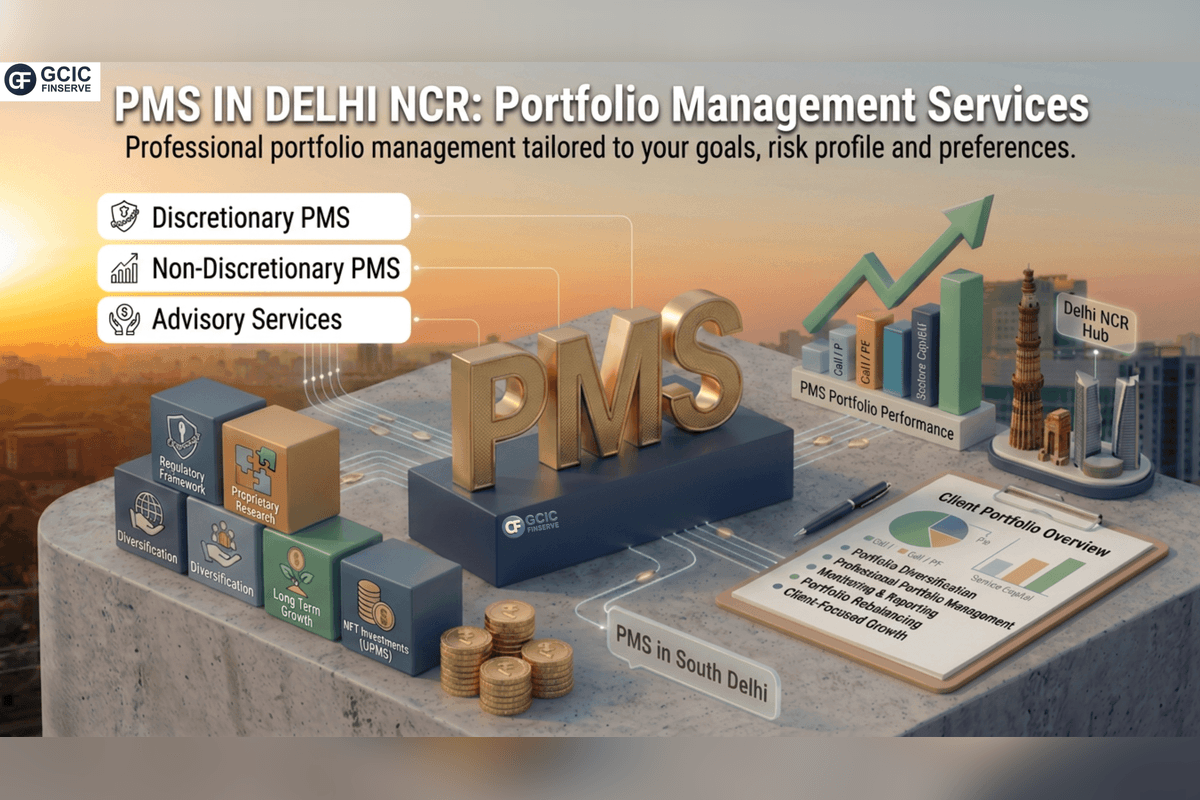
Once a portfolio grows past a certain size, picking individual stocks or a handful of mutual funds can start to feel less like a strategy and more like guesswork. That's usually the point where investors start looking for something more structured—built specifically around their own goals risk profile and preferences.
This is exactly the space Portfolio Management Services, or PMS, occupies.
For investors across Delhi NCR—South Delhi, Noida, Gurgaon, and Ghaziabad—understanding how PMS actually works can help you figure out whether it belongs in your overall investment strategy at all.
What Is Portfolio Management Services?
Put simply, PMS is a professional investment management service where a portfolio manager runs your investments according to an agreed strategy and your specific requirements.
SEBI recognizes a few different structures here—discretionary PMS and non-discretionary PMS, along with advisory services. In discretionary PMS, the portfolio manager makes the actual investment decisions within the agreed mandate. Non-discretionary PMS keeps you, the investor, involved in that decision-making process instead.
Unlike a mutual fund that pools money across many investors into one common portfolio, PMS is built around a single client's mandate—it's genuinely individual.
Why Do Investors Consider PMS?
PMS tends to appeal to investors who already have a sizable investment corpus and want something more tailored than a standard fund.
A few things typically draw investors toward it:
That said, PMS isn't a guaranteed-return product—market movements affect its value just like any other market-linked investment, and understanding those risks matters before you commit.
SEBI also requires portfolio managers to disclose fees, risks, and performance information clearly. Reading the disclosure document and the agreement carefully, before signing anything, isn't optional—it's genuinely worth your time.
- A portfolio designed around specific objectives
- Professional investment management
- Greater visibility into individual securities
- Strategies based on defined investment mandates
- Portfolio monitoring and reporting
Is PMS Suitable for Everyone?
PMS generally makes more sense for investors with a substantial corpus, a real understanding of market risk, and a comfort level with a professionally managed, strategy-driven portfolio.
Under the current SEBI framework, PMS requires a minimum investment of ₹50 lakh per client, with some exceptions—for accredited investors, for instance—subject to applicable provisions.
Before going down this route, it's worth weighing your financial goals, risk appetite, investment horizon, liquidity needs, and existing portfolio as a whole.
Why Consider GCIC Finserve for PMS?
If you're looking into PMS in Delhi NCR, GCIC Finserve can help you explore PMS opportunities through its distribution platform.
GCIC Finserve is based in Greater Kailash II, South Delhi, and is identified on its website as an APMI Registered PMS Distributor. The team also brings 30 years of experience in the financial services and investment domain, with a strong focus on client relationships.
GCIC's portfolio-tracking platform also covers PMS alongside mutual funds, shares, fixed deposits, and other investments—useful if you'd rather see everything in one place instead of juggling multiple logins.
PMS Should Start With Your Goals
Choosing a PMS strategy shouldn't come down to whichever one posted the highest past return—that's rarely the right way to pick one. A better approach looks at the investment philosophy behind it, the risk involved, the fees, how the portfolio is actually constructed, and whether any of it lines up with what you're actually trying to achieve.
If you're exploring portfolio management services in Delhi or South Delhi, GCIC Finserve can help you understand the available PMS options and evaluate whether one genuinely fits your broader investment plan.
Disclaimer: Investments in the securities market are subject to market risks. PMS does not guarantee returns. PMS services are provided by SEBI-registered portfolio managers and are subject to applicable regulations and terms and conditions. GCIC Finserve acts as an APMI Registered PMS Distributor. Please review the relevant disclosure documents and agreements carefully before investing. This article is for educational purposes only and should not be considered investment advice.
Mutual fund investments are subject to market risks, read all scheme related documents carefully. Past performance does not guarantee future returns.
Related Insights & Market Perspectives
What Happens to Your Investments After You Die? 7 Key Steps Every Delhi NCR Family Should Know
What happens to your investments after you die is a question many people avoid. We spend years deciding where to invest but very little time planning what happens to that money when we're gone. You may have mutual funds across several folios, shares in a demat account, fixed deposits with different banks, insurance policies, bonds,.
What Are Mutual Funds? A Beginner’s Guide to Smart Investing
What Are Mutual Funds? If you’re new to investing, you may have heard this question many times but still be unsure how mutual funds actually work. Mutual funds are a popular investment option because they allow investors to participate in a diversified portfolio managed by professionals. This beginner-friendly guide explains mutual fund basics, different types of.
Short-Term vs Long-Term Mutual Fund Investments: Which is Better for You?
Short term vs long term mutual funds is an important comparison for investors deciding how to align their investments with their financial goals. Mutual funds offer diversification, professional management and market-linked return potential, but the right investment approach depends on your goal, risk appetite, liquidity needs and time horizon. What Are Short-Term and Long-Term Mutual Funds?.