

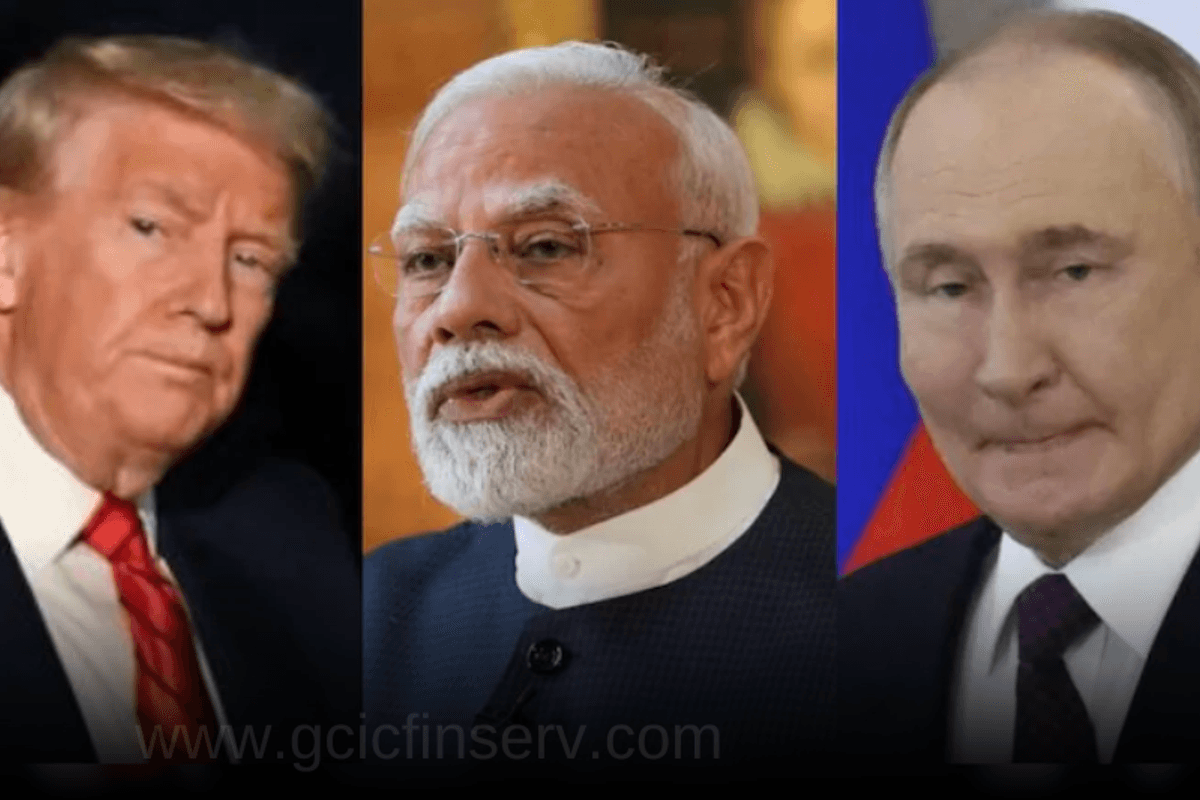
India tariffs have emerged as a major geopolitical and economic issue after Donald Trump suggested that the 50% tariff imposed on Indian goods may have indirectly influenced recent US-Russia discussions over the Ukraine war.
India Tariffs and US-Russia Talks: Is There a Link?
Trump suggested that the India tariffs may have played a role in the tone of recent discussions between Washington and Moscow. However, there is currently no independent confirmation that the tariff decision directly influenced Russia's position in the talks.
The comments nevertheless highlight how economic measures can become part of wider diplomatic strategies. Tariffs imposed for trade or geopolitical reasons can affect international relationships well beyond the countries directly involved.
50% Tariff on India: A Strategic Move?
Trump recently doubled the import tariff on Indian goods from 25% to 50%, citing New Delhi’s continued purchase of Russian oil. In a post on Truth Social, he speculated, "We put a 50 per cent tariff on India. I don’t know if that had anything to do with it, but we’ve had very productive talks today (with Russia)."
These comments came shortly after a high-level three-hour meeting between US special envoy Steve and Russian President Vladimir Putin in Moscow. Trump also mentioned that he’s planning to meet both President Putin and Ukrainian President Volodymyr Zelensky as early as next week in an attempt to broker peace.
Accusations Against India
Trump didn't mince words when criticizing India for what he called profiteering from Russian oil. "India is not only buying massive amounts of Russian oil, they are then selling it on the open market for big profits. They don’t care how many people in Ukraine are being killed by the Russian war machine," he stated.
When questioned if the punitive tariffs on India would be lifted if peace talks succeeded, Trump replied that the matter would be "determined later." As of now, the 50% tariff remains in place.
Why Only India? Could China Be Next?
Although several countries — including China — continue to import Russian oil, India has been uniquely targeted. When asked about this, Trump said, "It may happen. I mean, I don’t know. I can’t tell you yet, but I can (impose a punitive tariff). We did it with India. We’re doing it probably with a couple of others. One of them could be China."
The tariffs appear to be part of a broader strategy to pressure buyers of Russian oil, effectively choking the Kremlin’s wartime economy. Bloomberg reports that the US is also considering sanctions on Russia’s shadow fleet of oil tankers and various entities that support them.
India’s Response: “Unfortunate and Unjust”
India has condemned the tariff hike as “extremely unfortunate,” noting that its energy imports are based on market dynamics and national interest, not geopolitics. The Indian government reiterated its commitment to energy security for its 1.4 billion citizens and expressed disappointment over being singled out for actions others are also undertaking.
In a statement, India said: “We will take all necessary actions to protect our national interest.” The increased tariff on Indian goods is expected to take effect within the next three weeks.
Conclusion
While it's unclear whether the tariff hike on India truly influenced the tone of US-Russia talks, Trump’s remarks suggest a strategic use of economic pressure not just on adversaries but also on allies. As global tensions remain high, India finds itself caught in the middle of a high-stakes geopolitical and economic chessboard.
Mutual fund investments are subject to market risks, read all scheme related documents carefully. Past performance does not guarantee future returns.
Related Insights & Market Perspectives
What Happens to Your Investments After You Die? 7 Key Steps Every Delhi NCR Family Should Know
What happens to your investments after you die is a question many people avoid. We spend years deciding where to invest but very little time planning what happens to that money when we're gone. You may have mutual funds across several folios, shares in a demat account, fixed deposits with different banks, insurance policies, bonds,.
Indian Hotels profit up by 232% for Q2, reaching ₹554 crore, with revenue rising by 27%.
Indian Hotels profit jumped 232% year-on-year to ₹554.6 crore in the quarter ended September 2024, compared with ₹167 crore in the same quarter of the previous fiscal year. The strong increase in quarterly profit was accompanied by a 27.4% rise in operating revenue, highlighting continued growth in the company’s hospitality business. Indian Hotels Profit Rises.
Rupee Drops as Trump Threatens Higher Tariffs on India Over Russian Oil Trade
Indian rupee falls 20 paise against the U.S. dollar on August 5 as renewed trade tensions between India and the United States triggered investor concerns. The rupee opened at ₹87.85 against the dollar, compared with the previous close of ₹87.65, as markets reacted to former U.S. President Donald Trump's threat of higher tariffs on Indian imports.