

SIP vs Lump Sum Investment: Which Is Better for Investors in South Delhi?
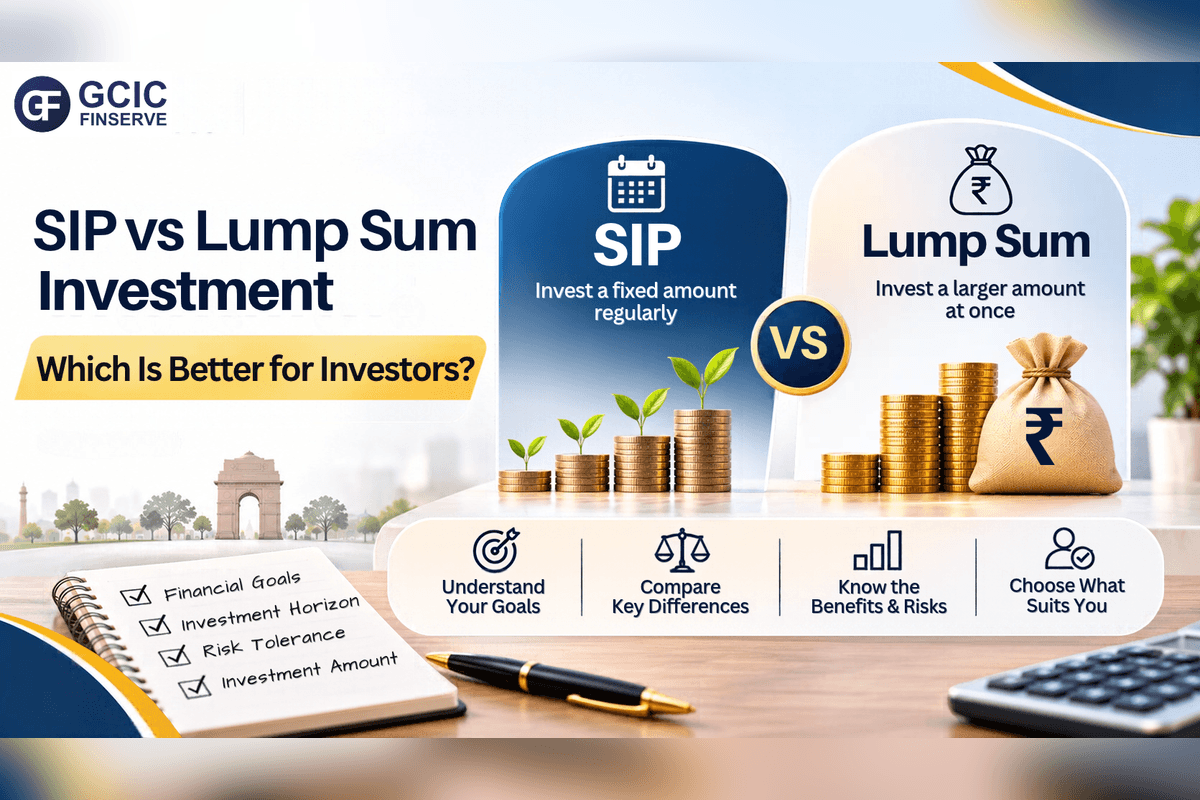
SIP vs Lump Sum Investment is a common question among people who want to start investing in mutual funds. Some investors prefer putting a fixed amount into a mutual fund every month, while others have savings available and want to invest a larger amount at once.
Both approaches have different features. The right choice depends on your income, savings, investment horizon, financial goals, and ability to handle market fluctuations.
For investors in South Delhi and across Delhi NCR, understanding these differences can make the investment decision easier.
What Is SIP Investment?
A Systematic Investment Plan (SIP) allows you to invest a fixed amount in a mutual fund scheme at regular intervals, usually monthly.
For example, an investor may choose to invest ₹5,000 every month instead of arranging a large amount at one time.
SIPs can encourage financial discipline because the investment happens at a regular interval. When markets are lower, the fixed amount may purchase more units; when markets are higher, it may purchase fewer units. This is known as rupee cost averaging. However, it does not guarantee profits or protect against losses.
Benefits of SIP
- Encourages regular investing.
- Allows investors to begin with smaller amounts, subject to scheme requirements.
- Helps build a consistent saving habit.
- Reduces the pressure of choosing one specific market entry date.
- Can support long-term financial goals.
What Is Lump Sum Investment?
A lump sum investment means investing a larger amount in a mutual fund scheme in one transaction.
For example, someone who receives a bonus, has accumulated savings or has surplus funds may consider investing ₹1 lakh at once.
Unlike SIP, the entire amount is exposed to market movements from the date of investment. Therefore, market conditions and the investor's time horizon become important considerations.
Benefits of Lump Sum Investment
- Allows surplus money to be invested immediately.
- May suit investors with a longer investment horizon and an understanding of market risk.
- Does not require monthly investment instructions.
- Can be useful when funds are already available for a planned financial goal.
However, investing a large amount at an unfavourable market level can lead to short-term losses. Market timing is difficult, even for experienced investors.
SIP vs Lump Sum Investment: Key Differences
| Feature | SIP | Lump Sum |
|---|---|---|
| Investment method | Regular instalments | One-time investment |
| Money required | Smaller periodic amounts | Larger amount available upfront |
| Investment timing | Spread across dates | Invested on one date |
| Discipline | Encourages regular investing | Requires separate planning |
| Market exposure | Builds over instalments | Entire amount exposed immediately |
Neither approach is automatically better. The choice should be based on the investor's financial situation rather than market predictions.
Which Investment Method May Suit You?
A SIP may be worth considering if you earn a regular monthly income, are new to mutual funds or prefer investing gradually.
A lump sum approach may be considered if you have surplus money, an appropriate investment horizon, and the ability to accept market fluctuations.
Some investors may use a combination of both approaches. For example, they may continue a monthly SIP while separately investing a portion of surplus savings after considering their financial needs.
Before investing, check the scheme's investment objective, expense ratio, portfolio, Riskometer, and other scheme-related documents.
How Can Delhi NCR Investors Start?
Investors in Greater Kailash, South Delhi, Noida, Gurgaon, and other parts of Delhi NCR can begin by identifying their financial goals and understanding their risk tolerance.
GCIC Finserve provides access to different mutual fund categories and investment resources. Explore the GCIC Finserve Mutual Funds page to learn about available categories.
You can also use the SIP Calculator to estimate possible investment values. The calculator provides illustrations, not guaranteed returns.
For further learning, visit AMFI's Investor Corner and SEBI Investor.
Explore Mutual Fund Investment Options With GCIC Finserve
If you are comparing investment approaches, take time to understand the available mutual fund categories and associated risks. Explore GCIC Finserve's mutual fund resources to learn more.
Frequently Asked Questions
Disclaimer: Mutual fund investments are subject to market risks. Read all scheme-related documents carefully before investing. This article is for educational purposes only and is not investment advice or a recommendation to buy or sell any scheme.
Related Insights & Market Perspectives
Diwali 2026: Smart Investment Habits to Build a Brighter Financial Future
Explore Diwali investment tips for 2026. Discover smart ways to save, invest regularly and build better financial habits for your long-term goals.
Zomato Stock Analysis: When Growth Stories Meet Valuation Reality
Strategic market intelligence covering asset allocation, economic indicators, and wealth structuring principles.
What Is KYC and Why Is It Important for Investors?
What is KYC and why is it important for investors? Delhi NCR investors learn the documents, process, and KYC statuses explained simply by GCIC Finserve.