

Gold vs Equity: Where Should Investors Look for Opportunities?
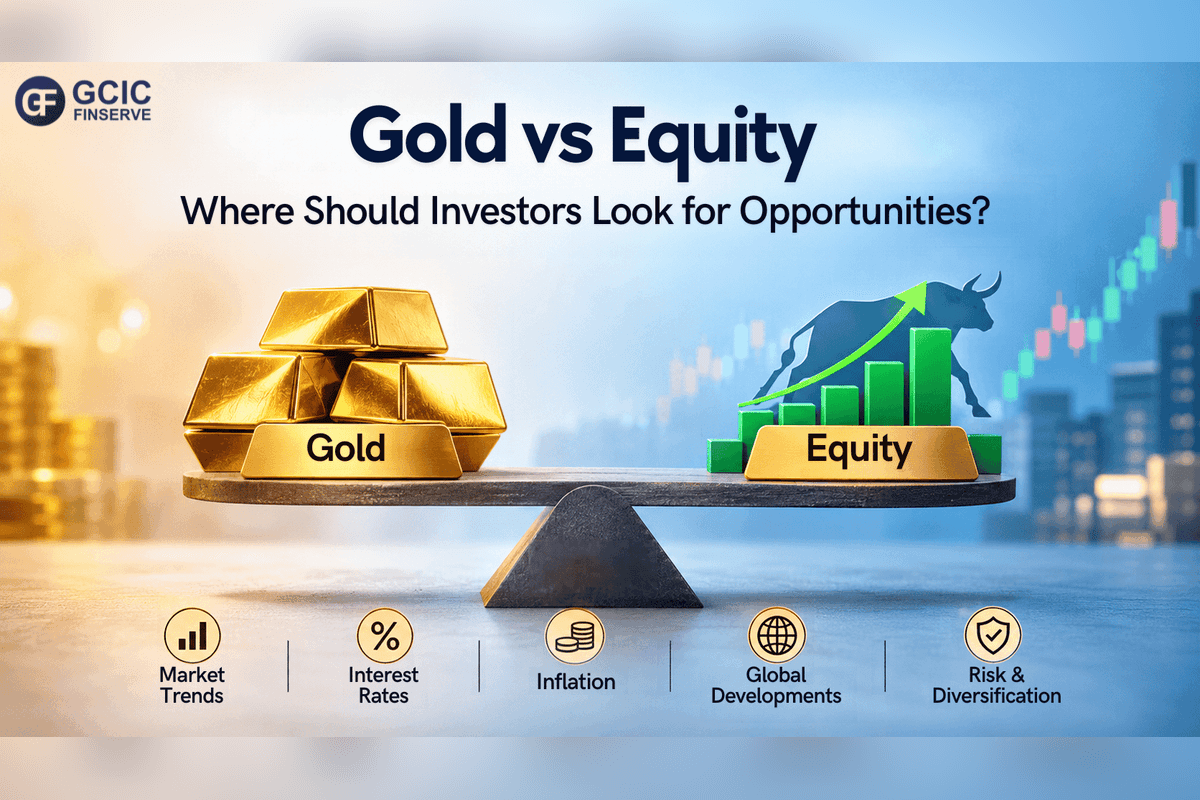
When it comes to investing, one question often comes up: Should you invest in gold or equity?
Both have been important parts of the Indian investment landscape for years. Gold is traditionally associated with wealth preservation and diversification, while equity offers investors an opportunity to participate in the growth of businesses.
However, market conditions are constantly changing. Interest rates, inflation, global uncertainty, company earnings, and investor sentiment can influence how these assets perform.
In 2026, understanding the difference between Gold vs Equity is particularly important. Investors should look beyond short-term price movements and understand the role each asset can play in a portfolio.
But which one deserves more attention in 2026? Let's understand both in simple terms.
1. What Is the Difference Between Gold and Equity?
Gold and equity are two different asset classes with different investment characteristics.
Gold is a precious metal that investors often consider during periods of economic uncertainty, inflation concerns, or market volatility. It can be held physically or through financial instruments such as Gold Exchange Traded Funds (ETFs).
Equity represents ownership in a company. Investors can participate in equity markets directly through shares or indirectly through equity mutual funds.
If you want to understand how mutual funds provide access to different market investments, explore Mutual Fund Investment by GCIC Finserve.
The main difference is simple: gold does not represent ownership in a business, whereas equity provides exposure to the financial performance and potential growth of companies.
Both assets can behave differently under changing economic conditions. This is one reason investors often study them together when understanding portfolio diversification.
2. Why Are Investors Interested in Gold in 2026?
Gold continues to attract attention because of its traditional role as a store of value and its potential diversification benefits.
Gold prices can be influenced by changing geopolitical conditions, investor sentiment, currency movements, and interest rate expectations.
Here are some important factors investors should understand.
Global economic uncertainty
During periods of economic or geopolitical uncertainty, some investors consider gold as a potential safe-haven asset. However, gold prices can also decline, sometimes significantly.
Inflation concerns
Gold is often viewed as a potential hedge against inflation over certain periods. However, it does not always move in line with inflation, and its performance depends on several market factors.
Central bank demand
Central banks around the world hold gold as part of their reserves. Their purchases and sales can influence global gold demand and market sentiment.
Currency movements
International gold prices are generally quoted in US dollars. Therefore, movements in the rupee-dollar exchange rate can influence domestic gold prices in India.
Interest rate movements
Changes in interest rates and bond yields can affect the attractiveness of gold compared with interest-generating investments. Gold itself does not provide regular interest income.
For investors, the important point is that gold prices are influenced by several interconnected factors. Past price movements should not be treated as a guarantee of future performance.
3. Why Does Equity Remain Important in 2026?
Equity investment provides exposure to businesses and their potential growth.
When companies expand their operations, improve earnings, introduce new products or strengthen their market position, their share prices may benefit. However, business growth does not automatically translate into higher share prices.
Some important factors influencing equity markets in 2026 include:
Corporate earnings
Company revenue, profitability, operating margins, and future growth expectations play an important role in determining stock valuations.
Indian economic growth
Consumption, infrastructure development, manufacturing activity, and business investment can influence the performance of Indian companies.
Interest rate movements
Changes in borrowing costs can affect businesses, consumers, and market valuations. Higher borrowing costs may create challenges for certain companies, while lower rates can support economic activity.
FII and DII investment flows
Foreign Institutional Investors (FIIs) and Domestic Institutional Investors (DIIs) are important participants in Indian equity markets. Their buying and selling activity can influence short-term market movements.
Global developments
Geopolitical developments, crude oil prices, international interest rates, and global economic conditions can affect Indian equity markets.
Equity can offer long-term wealth creation opportunities, but investors must also be prepared for market volatility and the possibility of capital loss.
4. Gold vs Equity: Key Differences
Understanding the features of both assets can help investors make more informed decisions.
| Comparison | Gold | Equity |
|---|---|---|
| Asset type | Precious metal | Ownership in businesses |
| Main purpose | Potential store of value and diversification | Participation in business growth |
| Income generation | Generally no regular income | Dividends may be received |
| Price drivers | Global demand, currency, interest rates and geopolitical factors | Earnings, valuations and economic conditions |
| Risk | Gold price fluctuations | Market and company-specific risks |
| Liquidity | Depends on the investment form | Depends on shares or investment instrument |
| Long-term potential | Depends on gold market conditions | Depends on business growth and valuations |
There is no universal winner in the Gold vs Equity comparison. Their performance depends on market conditions, investment periods, and the instruments selected.
5. What Are the Risks of Gold and Equity?
Every investment carries some level of risk. Understanding these risks is just as important as understanding potential returns.
Risks associated with gold
- Gold prices can rise or fall due to global market developments.
- Gold does not generate regular interest or business income.
- Physical gold may involve storage, purity and making-charge considerations.
- Gold ETFs have market, tracking and expense-related considerations.
- Sudden changes in currency movements and investor sentiment can affect gold prices.
Risks associated with equity
- Share prices can fluctuate significantly.
- Poor company performance can affect investment value.
- Market valuations may change due to economic and global developments.
- Equity mutual funds are exposed to market risks and do not guarantee returns.
- Short-term market volatility can affect the value of an investment portfolio.
If you invest through mutual funds, understanding the scheme's risk level is important. You can also read GCIC's guide on the SEBI Riskometer for Mutual Funds.
Investors should understand the risks of the specific investment instrument before making a decision.
6. Gold vs Equity: What Should Investors Watch in 2026?
Rather than trying to predict which asset will perform better, investors can follow important market developments that may influence both gold and equity.
Here are five factors worth watching in 2026.
1. Global interest rate decisions
Central bank decisions, particularly changes in US interest rate expectations, can influence bond yields, currency movements and investor demand for gold.
They can also affect equity valuations and corporate borrowing costs.
2. Central bank gold purchases
Central bank demand remains an important factor in the international gold market. Changes in reserve management strategies can influence gold demand and market sentiment.
3. Indian corporate earnings
For equity investors, company earnings are an important indicator to monitor. Revenue growth, profitability, debt levels and business performance can provide useful insights into the financial health of companies.
4. FII and DII investment activity
Institutional investment flows can influence market sentiment and short-term equity movements. However, investment decisions should not be based only on institutional buying or selling activity.
5. Rupee-dollar movements and crude oil prices
India imports crude oil and gold. Changes in international prices and currency movements can influence domestic economic conditions, inflation and investor sentiment.
These factors can create both opportunities and risks. They should be viewed as indicators to understand market conditions, not as reliable predictions of future investment returns.
7. Should You Invest in Gold or Equity in 2026?
The answer depends on your financial goals, investment horizon, liquidity requirements, and ability to tolerate risk.
Rather than treating gold and equity as competing choices, investors can understand how different asset classes may serve different purposes.
For example:
- Gold may provide diversification and exposure to precious metal prices.
- Equity may provide participation in the growth of businesses.
- Debt instruments may offer different income and risk characteristics.
A diversified portfolio spreads exposure across different asset classes. However, diversification does not eliminate market risk or guarantee protection against losses.
There is no single allocation suitable for every investor. Portfolio decisions should consider individual circumstances, financial objectives, and the characteristics of the investments involved.
If you are comparing mutual fund options, GCIC's Scheme Comparison Tool can help you review scheme details such as risk, returns, and costs.
Investors should also avoid making decisions based only on recent market performance. An asset that has performed well recently may not necessarily continue performing in the same way.
At GCIC Finserve Limited, we believe that understanding investment products, market developments, and associated risks is an important part of making informed financial decisions.
Conclusion: Gold vs Equity in 2026
The Gold vs Equity debate is not necessarily about choosing one asset over another.
Gold and equity serve different purposes and respond differently to economic developments. Gold prices can be influenced by global demand, currency movements and interest rates, while equity markets are influenced by company earnings, valuations and economic growth.
In 2026, investors should look beyond short-term market movements and understand how different asset classes relate to their financial goals and risk tolerance.
The real opportunity lies in understanding the market, recognising investment risks and making informed decisions rather than following market trends blindly.
A well-understood investment approach begins with knowledge, realistic expectations and awareness of risk.
Frequently Asked Questions
Disclaimer: This article is for educational purposes only and should not be considered investment advice. Investments are subject to market risks, including possible loss of capital. GCIC Finserve Limited is an AMFI-registered Mutual Fund Distributor (ARN-272705), not a SEBI-registered Investment Adviser. Mutual Fund investments are subject to market risks, read all the related documents carefully before investing.
Related Insights & Market Perspectives
The Gold-Only Family Portfolio: Why Putting All Your Wealth in One Asset Can Be Risky
Discover why a gold-only family portfolio can be risky. Understand gold investment risks, hidden costs and the importance of diversification.
Types of Mutual Funds and How to Choose the Right One for You
Understand the types of mutual funds in India, their features and risks. Learn how to choose funds based on your financial goals and investment horizon.
Daily SIP vs Monthly SIP: What Is the Difference?
Daily SIP vs monthly SIP: Understand how investment frequency, convenience, market volatility, and long-term goals differ before choosing an SIP approach.